Beetroot juice in cycling: what research says about nitrates and performance

More and more of your clients are saying: “I drank beetroot juice before my race.” Some treat it as a placebo, others as a secret podium ingredient. The truth lies somewhere in between — but closer to the podium than you might think.
Beetroot juice is one of the few legal supplements backed by solid scientific evidence. It works thanks to inorganic nitrates, which your body converts into nitric oxide — a molecule that widens blood vessels and improves muscle performance. As a trainer working with amateur cyclists, you need to know this topic inside and out.
In this article you will find specific numbers from research, a practical dosing protocol, and tips you can turn into actionable advice for your clients.
Nitrates and nitric oxide: how it works
Beetroot is one of the richest dietary sources of inorganic nitrate. Beetroot juice contains around 250 mg of nitrate per 100 ml. But nitrate (NO₃⁻) alone does nothing spectacular. The magic starts in your mouth.
The metabolic pathway looks like this: you swallow the juice → nitrates reach the saliva → oral bacteria reduce them to nitrite (NO₂⁻) → in the stomach and tissues, nitrite converts to nitric oxide (NO). The entire process takes 2–3 hours from drinking the juice.
Key fact: oral bacteria are essential in this process. If you rinse your mouth with antibacterial mouthwash, you kill exactly the bacteria responsible for the conversion. Studies show that mouthwash can reduce the supplementation effect by up to 50%.
Nitric oxide works on several fronts simultaneously:
- Vasodilation — greater blood flow to working muscles, lower blood pressure.
- Reduced oxygen cost — muscles use less oxygen at the same exercise intensity.
- Better mitochondrial efficiency — mitochondria produce ATP more effectively, so energy reaches muscles faster.
- Improved contractile function — muscle fibres contract more forcefully and quickly at lower energy cost.
The net effect: your client rides faster at the same effort level. Or rides at the same speed but with less fatigue. Both scenarios have real significance on the road.
What the research says: cycling under the microscope
Nitrate supplementation has a solid scientific base. Here are the key studies you should know to discuss this topic with clients from a position of expertise.
Lansley et al. (2011, Journal of Applied Physiology) tested cyclists performing 4 km and 16.1 km time trials. The beetroot juice group improved their result by 2.8% compared to placebo. Over 16.1 km, that is a difference of around 50–60 seconds — a chasm in amateur racing.
Bailey et al. (2009) showed that beetroot juice reduced the oxygen cost of moderate-intensity cycling by 5.4%. This means that at the same VO₂, your client can sustain higher power output.
Muggeridge et al. (2014) confirmed the effect in trained cyclists: beetroot juice improved 16.1 km time-trial performance by 2.7%. This matters because it was initially thought the effect only worked in beginners.
Cermak et al. (2012, meta-analysis of 17 studies) compiled data from the most important clinical trials. Conclusion: nitrate supplementation improves time-trial performance by an average of 1–3%. This is scientific consensus, not a single experiment.
Important nuance: the size of the effect depends on the athlete's level. Amateur and recreational cyclists gain more: 3–5% improvement. Elite athletes — 0.5–1.5%. Why? Well-trained athletes already have optimised nitric oxide production pathways. Their bodies produce more NO endogenously, so the extra dose from beetroot makes a smaller difference.
This is exactly why your clients — amateurs training 3–5 times a week — are the ideal target group for this strategy. The lower the fitness level, the greater the potential gain.
Additional observations from research: the effect may be stronger at altitude (where oxygen availability is lower) and in hot conditions (where blood flow plays a key role in thermoregulation). If your client is planning a mountain cycling marathon in summer, beetroot could be even more valuable.
Dosing and timing: a practical protocol
Theory without practice gets you nowhere. Here is a ready-made protocol you can pass on to your client.
Effective dose is 6–8 mmol of nitrate. This equals roughly 500 ml of regular beetroot juice or 70 ml of a concentrated shot (e.g. Beet It Sport). Most studies used concentrated preparations because the dose is easier to control.
Timing is crucial. Plasma nitrite concentration peaks 2–3 hours after drinking. Therefore, the juice should be consumed 2–3 hours before training or racing. Drinking it 30 minutes before the start is too late — the body will not have time to process the nitrate.
Single dose or chronic loading? A single dose works. But research indicates that a 3–6-day loading protocol produces a stronger effect. Plan for a client before a key race:
- Days 1–5 before the race: 70 ml concentrated juice daily (morning).
- Race day: 70 ml, 2–3 hours before the start.
- Continue the normal nutrition plan — nitrates do not interfere with carbohydrates.
What to avoid: do not combine beetroot juice with vitamin C supplements. Ascorbic acid can interfere with the conversion of nitrate to nitrite. This way your client avoids a situation where supplementation fails because they are simultaneously taking mega-doses of vitamin C.
Cost: a concentrated shot like Beet It costs around 4–6 EUR per serving. 500 ml of pressed beetroot juice costs roughly 2–3 EUR. That is comparable to one energy gel — and the effect may be greater.
Safety and limitations
Beetroot juice is safe for the vast majority of people. But you need to be aware of a few things so you do not catch your client off guard.
- Beeturia — red discolouration of urine and stool after drinking the juice. Occurs in 10–15% of people. It is completely harmless, but your client may be alarmed. Warn them in advance.
- Stomach discomfort — in some people, especially at the full 500 ml dose. Solution: start with half the dose and increase gradually.
- Mouthwash — antibacterial rinses reduce or eliminate the effect. Inform your client not to rinse with Listerine before training.
- Blood pressure medication — nitrates lower blood pressure. People taking antihypertensive drugs should consult their doctor. The effects can stack.
- Kidney disease — people with kidney insufficiency should avoid high doses of nitrate. Consult a doctor.
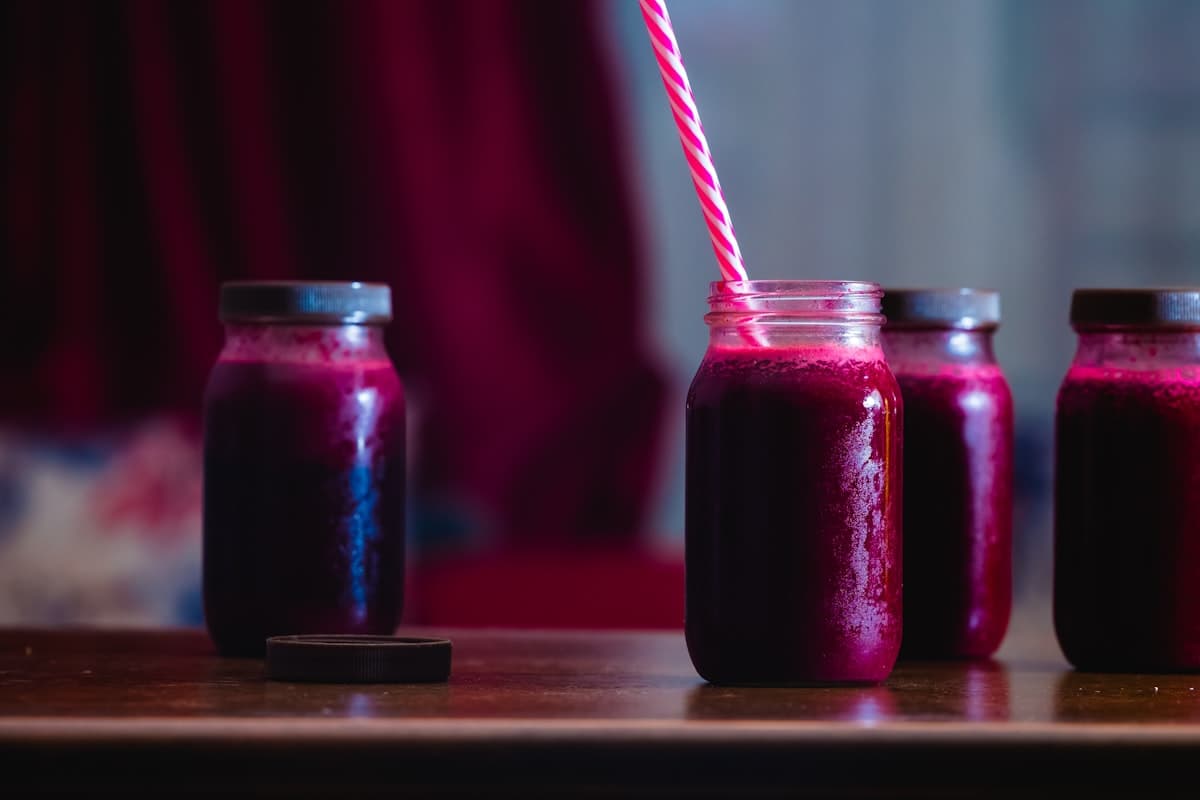
- Staining — beetroot juice stains teeth, clothes, and kitchen surfaces. Practical tip: drink through a straw and keep the juice away from white surfaces.
Legality: beetroot juice is not on any prohibited substance list. It is fully legal in all sports disciplines, including UCI cycling. Your client can drink it without any concerns before a race.
Cermak's 2012 meta-analysis covering 17 studies found that nitrate supplementation improves time-trial performance by an average of 1–3% — in cycling, that is the difference between the podium and the peloton.
Summary
Beetroot juice is not magic — it is science. It works, it has solid evidence, and it costs less than a pre-workout coffee. As a trainer, you can integrate it into the nutrition strategy of your cycling clients.
Here is what to recommend to your client:
- Buy concentrated beetroot juice (70 ml shot) or 500 ml of pressed juice.
- Test tolerance during training, not on race day.
- Drink 2–3 hours before a key effort.
- Before an important race, follow a 3–6-day loading protocol.
- Do not rinse your mouth with antibacterial mouthwash on supplementation day.
- Avoid vitamin C around the time of dosing.
- Monitor well-being and stomach response.
Nitrate supplementation is one of the few evidence-based strategies that genuinely translates to faster times on the road. 1–3% may not sound like much, but in an amateur race it is the difference between a personal best and frustration. With EloByku you can track your clients' progress and tailor their nutrition plan to their race goals.