BLIK, Przelewy24 and Cash: How Polish Studios Manage Payments

The Polish payment landscape: a unique challenge for the fitness industry
Poland has one of the most innovative payment systems in Europe. BLIK — a unique mobile payment system created by Polski Standard Platnosci — accounts for approximately 62% of all mobile payments in the country. This is a phenomenon on a global scale: no other European country has such a dominant, homegrown digital payment system.
For fitness studio owners and personal trainers, this payment landscape creates both opportunity and challenge. On one hand, Polish consumers are accustomed to instant, cashless transactions. On the other, the multitude of payment methods means that a studio must support BLIK, cards, traditional bank transfers, and still-popular cash.
BLIK: Poland's payment revolution
BLIK is a Polish phenomenon you won't find in any other country. The system works directly from the banking app — the user generates a 6-digit code valid for 2 minutes and provides it at payment. It's simple, fast, and integrated with virtually every Polish bank.
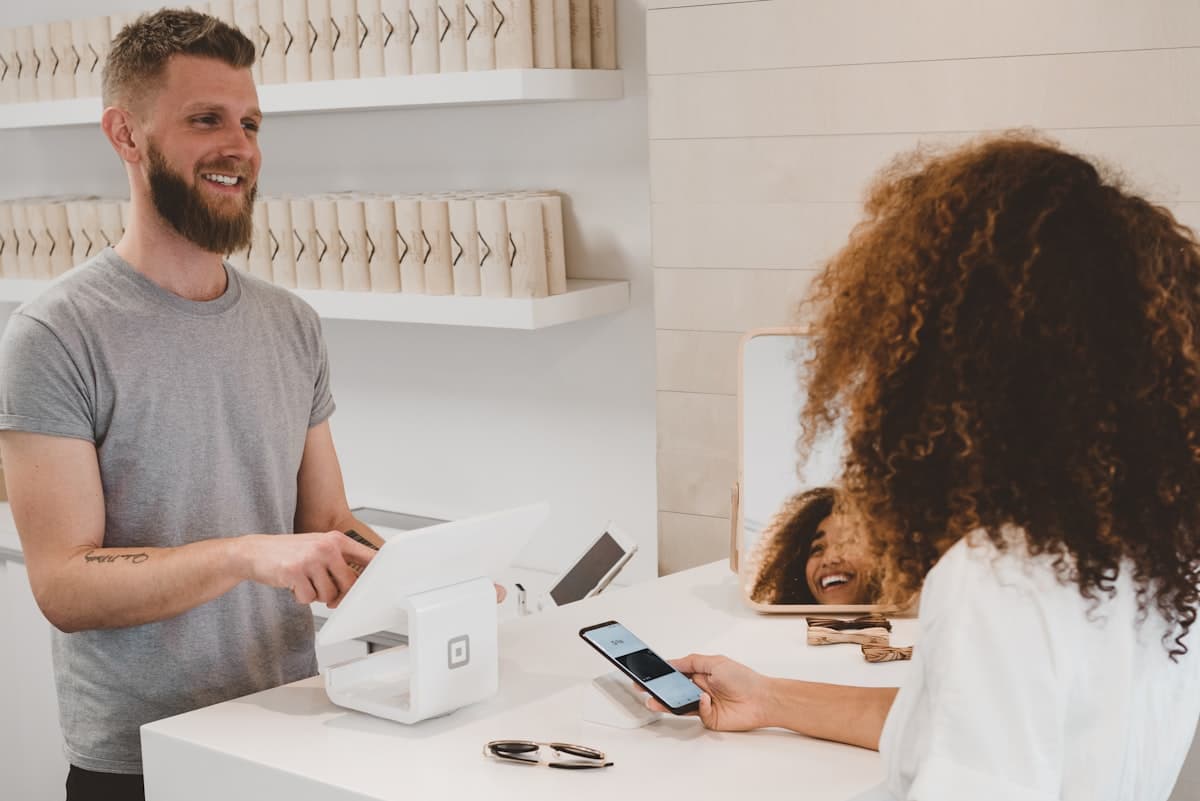
In the fitness industry context, BLIK is particularly significant for in-person payments. According to 2025 market data, BLIK accounts for approximately 35% of all digital in-person payments in Poland. For personal trainers, BLIK has become the default settlement method with clients — a quick transfer after a training session. The problem is that manually sending BLIK requests after each session and tracking who paid and who didn't consumes enormous amounts of time.
Trainers report losing an average of PLN 300-500 per month in payments they forget to chase — precisely because the mix of cash, BLIK, and bank transfers is too complicated to track manually in a phone Notes app.
Przelewy24, PayU, and Tpay: payment gateways for studios
For studios wanting to accept online payments — for memberships, training packages, or class bookings — Polish payment gateways play a crucial role. Przelewy24 handles approximately 15% of online payments in Poland and natively supports BLIK, making it a natural choice for Polish fitness businesses.
A comparison of major payment gateways available to Polish studios reveals clear differences. Przelewy24 offers fees of 1.2-1.9% + PLN 0.25 per transaction with native PLN settlement. PayU, at 1.4-2.2% + PLN 0.20, additionally provides Central and Eastern European market coverage. Tpay is the cheapest option at 1.0-1.5% + PLN 0.25, though with limited international expansion capabilities.
All three gateways support BLIK and recurring payments, and settle natively in PLN — eliminating the costly currency conversions that users of foreign platforms struggle with.
Cash: the persistent reality of smaller studios
Despite the digital revolution, cash still plays a significant role in Polish fitness. Market data indicates that cash accounts for approximately 15% of in-person transactions in Poland overall, but in smaller, independent studios this percentage is considerably higher.
Around 30% of independent studios still rely on manual invoicing, and a significant portion of transactions happen in cash — especially for personal training sessions and drop-in visits. For studio owners, this means double bookkeeping: digital for transfers and BLIK, paper or Excel for cash.
A fiscal cash register (kasa fiskalna) is mandatory for B2C sales above PLN 20,000 per year — meaning virtually every studio that accepts cash must have one. This is yet another layer of administrative complexity.
Recurring payments: a Polish cultural challenge
In Anglo-Saxon countries, the subscription model with automatic card charging is standard. In Poland, the situation is different. The Polish fitness market operates on a karnet (membership pass) system that differs from Western subscription models.
The most popular forms include: monthly karnet (PLN 100-200 for unlimited access), class-pack karnet (packages of 4, 8, or 12 entries for PLN 60-200), and drop-in visits (PLN 25-50). Each form requires different payment logic — from one-time prepayment to cyclical renewal.
An additional complication are MultiSport and FitProfit cards — employer-subsidized benefit programs used by approximately 1.5 million Poles. Studios must decide whether to accept these cards (high volume, low margin) or reject them (lower volume, higher margin, more loyal clients). The payment system must support settlements with these programs.
Stripe and international platforms: limitations in the Polish market
Many international fitness studio management platforms (like Mindbody or Glofox) rely on Stripe as their primary payment gateway. Stripe works in Poland, but with significant limitations for local fitness businesses.
First, Stripe's fee (1.5% + PLN 1.00 per transaction) is significantly higher than Polish gateways. Second, BLIK support in Stripe works indirectly through Przelewy24 — meaning an additional layer of intermediation and potential user experience issues. Third, PLN settlements require currency conversion, generating additional costs.
However, Stripe has a significant advantage: excellent recurring payment API and full EU market coverage. For platforms planning international expansion, Stripe as a subscription layer complementing a Polish gateway is the optimal hybrid solution.
KSeF and e-invoicing: the coming revolution
The National e-Invoice System (KSeF) is a mandatory electronic invoicing system being implemented in Poland during 2025-2026. For fitness studios that settle with trainers on B2B contracts, this means a fundamental change in the invoicing process.
All B2B invoices must be generated in XML format compliant with the FA(2) schema and submitted electronically to KSeF. Each invoice receives a unique KSeF identification number. Submission must occur in real-time or near-real-time.
For studio owners who previously sent invoices as PDF email attachments, this is a massive change. A studio management platform that automatically generates KSeF-compliant invoices becomes not a luxury, but a necessity.
How EloByku approaches multi-channel payments
Understanding the specifics of the Polish market, EloByku's approach to payments is built on several fundamental principles.
First, native support for Polish payment gateways. Przelewy24 or Tpay as the primary gateway ensures the lowest fees, native BLIK, and PLN settlements without currency conversions.
Second, cash tracking as a first-class feature. Studios cannot abandon cash overnight. The system must allow recording cash payments with the same ease as digital ones — a unified payment ledger regardless of channel.
Third, native karnet system support. Rather than trying to impose a Western subscription model, the platform must support monthly karnets, class packs, drop-ins, and MultiSport/FitProfit settlements as native concepts.
Fourth, KSeF readiness. Automatic generation of invoices compliant with the National e-Invoice System requirements eliminates one of the biggest administrative problems facing Polish fitness studios.
The Polish payment market is simultaneously more innovative and more complicated than Western Europe. A platform that truly wants to serve Polish fitness studios cannot simply plug in Stripe and call the problem solved. It must understand BLIK, respect cash, support karnets, and be ready for KSeF. Because in Poland, payments are not just technology — they are culture.