Poland's Child Protection Standards (Kamilek Act) for Training Studios — a Compliance Guide
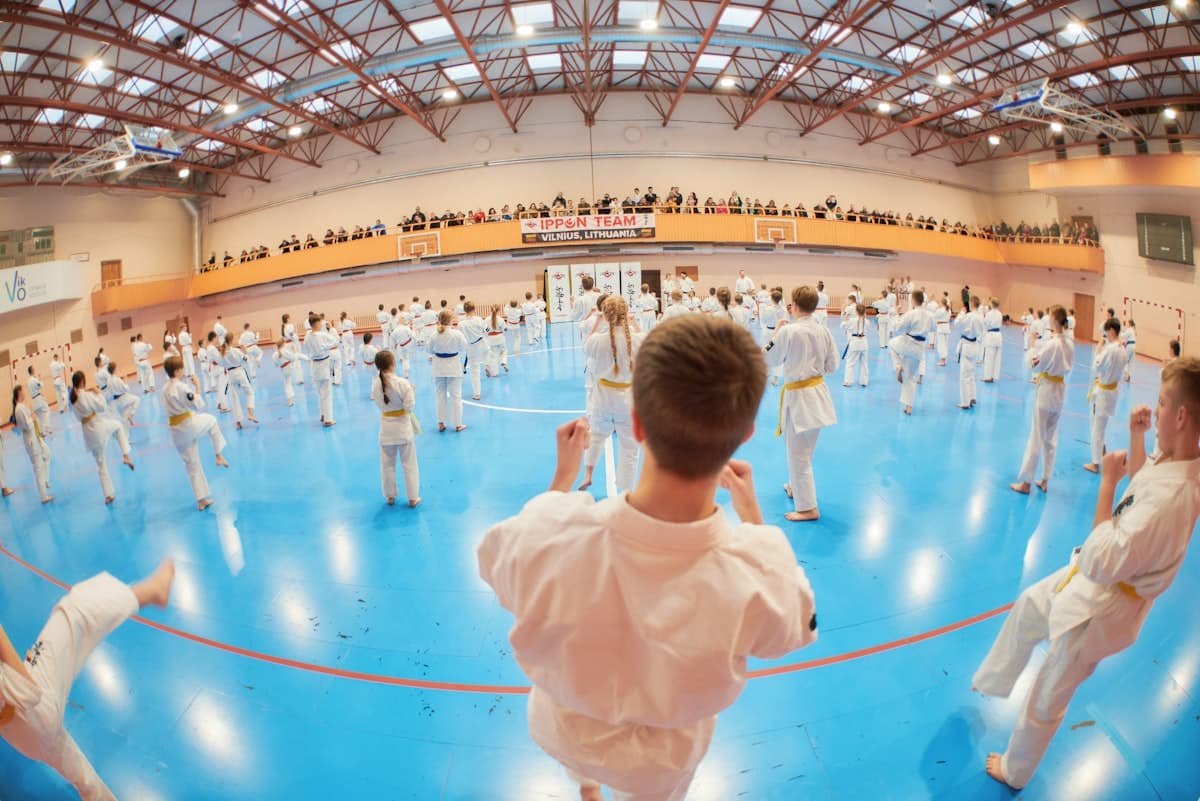
Do you run kids' judo, karate, acrobatics, or fitness classes? If even one class on your schedule serves anyone under 18, Poland's child protection law applies to your studio — whether you run it as a sole proprietor, a sports club, or a chain of martial arts schools with several locations.
This isn't a rule just for schools and kindergartens. It covers every entity and every person organizing sports, recreational, or hobby activities for children — which means trainers, instructors, and studio owners directly. This guide covers exactly what you need in place, who checks it, and what's at risk if you skip it.
What the law is and when it took effect
The Act of 28 July 2023 amending the Family and Guardianship Code and certain other acts (Journal of Laws 2023, item 1606), commonly called the "Kamilek Act" (ustawa Kamilka), was passed after the death of eight-year-old Kamilek from Częstochowa, who was killed as a result of domestic violence. The nickname stuck in the media and in legal practice, though the act itself amends several laws at once.
The part most relevant to fitness and sports businesses adds an obligation to have "child protection standards" into the Act of 13 May 2016 on Counteracting Threats of Sexual Offences and Protection of Minors. These provisions took effect on 15 February 2024, with a 6-month transition period to prepare the documentation. Since 15 August 2024, the standards must be actually functioning — not a draft, but an implemented document your staff genuinely uses.
Who it applies to in the fitness and sports industry
The obligation to implement standards applies to bodies managing educational, care, educational-upbringing, resocialization, religious, artistic, medical, recreational, sports, or hobby-development facilities for minors, as well as organizers of such activities. In practice, that means directly:
- sports clubs and martial arts schools running children's and youth groups (judo, karate, BJJ, boxing, MMA),
- fitness and acrobatics studios with kids classes (gymnastics, cheerleading, dance, parkour),
- dance schools and sports academies organizing camps and sports trips for children,
- any trainer or instructor running such classes solo, acting as the organizer of the activity.
Legal form and group size don't matter here. If you offer even one children's or youth group, you're covered by the obligation — the same as a large sports academy with hundreds of athletes.
In martial arts and acrobatics specifically, age groups often mix — a single session may have 10-year-olds training alongside 17-year-olds preparing for senior competitions. As long as one person under 18 is in the group, the whole group and the whole schedule fall under the standards. The same applies to sports camps, inter-club sparring, and competition trips, where a trainer's duty of care extends well beyond a single training session.
What the standards document must contain
The law specifies exactly what elements the standards document must contain. It's not a one-page declaration — it's a set of real procedures your staff knows and follows. Your studio's standards should specifically define:
- rules ensuring safe relationships between minors and staff or volunteers, including explicitly named prohibited behaviors,
- rules for safe relationships among the minors themselves (e.g. on the mat, in the changing room, during trips),
- how disclosed or reported cases of harm are documented and stored,
- the intervention procedure when abuse of a child is suspected,
- procedures and the designated people responsible for reporting suspected crimes against a minor and for triggering the "Blue Card" domestic-violence procedure,
- the person or people responsible for receiving reports and providing support to the child,
- rules protecting children's personal data and image (e.g. photos and videos from classes, club social media),
- rules for using internet-connected devices on the premises,
- how the standards are shared and explained to parents and children in a form they can understand,
- rules for reviewing and updating the standards — at least once every two years.
Poland's Ministry of Justice has published guidelines and sample templates for different types of facilities — a good starting point, but the document still needs to match your studio's reality: number of trainers, type of classes, whether you run trips and camps.
Verifying staff and volunteers against the registers
A separate, parallel obligation is verifying everyone you hire or allow to work with children — including contracted trainers, interns, and volunteers — against the restricted-access Register of Sexual Offenders (RSPTS), under Article 21 of the 2016 Act. You also check whether the person appears in the register of individuals against whom Poland's State Commission for paedophilia cases has issued a registration decision.
In practice, three operational rules follow. First, verification must happen before the person has any contact with children — not during employment, and not as an afterthought. Second, keep proof of the check (a screenshot or printout with a date) alongside the person's file, because you're the one who has to demonstrate the check was done. Third, this covers everyone who has contact with children through the club's activities — including people on civil-law contracts or running a one-off workshop.
Here's what that looks like step by step when onboarding a new trainer:
- Collect the data needed for verification: full name, date and place of birth, national ID number if the candidate has one.
- Submit a query to the restricted-access Register of Sexual Offenders — online access requires a trusted profile or e-ID.
- Wait for the result before allowing the person any contact with a children's group, even for a trial class.
- Record the date and result of the check in the person's file.
- Repeat the check whenever the working arrangement changes, if the earlier check didn't cover the new scope of duties.
A clean result (no entry found) doesn't exempt you from having the standards document — they're two independent requirements you have to meet in parallel, not one instead of the other.
Inspections and penalties
Implementation of the standards can be checked by the local mayor (wójt/burmistrz/prezydent miasta), the county head (starosta), and the regional governor (marszałek województwa), and in educational institutions also by the supervising authority or the body responsible for pedagogical oversight. The National Labour Inspectorate (Państwowa Inspekcja Pracy) can also verify employment-related obligations, including the registry check.
Penalties for not having the standards implemented are set out in Article 23b of the Act on Counteracting Threats of Sexual Offences and Protection of Minors. Anyone obligated to implement the standards who fails to do so is subject to a fine of up to 250 PLN or a reprimand on first finding. On a repeat finding, the fine is no less than 1,000 PLN.
A separate penalty applies to failing to verify a staff member in the register before allowing them to work with children — here the law provides for restriction of liberty or a fine of no less than 1,000 PLN. That's a real financial and reputational risk for a studio, and one that's easy to eliminate with one organized trainer onboarding process.
In practice, an inspection starts with a simple question: does the standards document exist at all, and does staff know where to find it. An inspector may ask to see the registry-verification records for your trainers, confirmation that parents were informed of the standards, and the incident log if any reports occurred. Missing any one of these can be grounds for a finding of non-compliance, even if everything else works correctly.
Getting this done operationally: an implementation checklist
Implementing the standards breaks down into a handful of concrete steps. The list below doesn't replace individual legal advice, but it organizes the key tasks to check off in your studio:
- Assign someone responsible for drafting, implementing, and periodically reviewing the standards.
- Write the standards document based on the ministry's guidelines, adapted to your type of classes and number of locations.
- Verify every trainer, instructor, and volunteer in the registry before they have contact with children — and keep proof of that check.
- Train all staff on the content of the standards and the intervention procedure for suspected harm.
- Share the standards with parents and children in an understandable form — e.g. at sign-up and on a notice board at reception.
- Set up an incident and report log with a clearly assigned person responsible for handling it.
- Put a calendar reminder to review the standards at least once every two years.
How EloByku helps you organize documents and permissions
EloByku doesn't make your studio compliant with the Kamilek Act — that's always the studio owner's responsibility and the result of their own organizational decisions. What the platform does is help organize the operational side, which in most clubs today lives scattered across spreadsheets, emails, and trainers' personal phones.
Granular permissions in the trainer panel let you define precisely which staff member has access to a given children's group's data, and who only sees their own schedule — instead of one shared admin account everyone uses.
Every change to permissions, client data, or a document is recorded in an audit log — you know who changed what, and when, which makes it easier to show that the process at your studio is actually controlled, not just based on trust and memory.
A document safe with time-limited presigned links stores consent forms, parental agreements, and registry-verification results — all in one place, tied to a specific client's profile, instead of sitting in the front-desk inbox.
On top of that, per-client care checklists — image consent confirmation, guardian contact details, health information — show at a glance whether every required document is complete before a child walks into their first class.
For an owner running several clubs, that means one source of truth instead of a separate spreadsheet per location. A manager at one studio sees only their own trainers and clients; the owner of the whole chain sees the full picture across every location. That makes answering an inspector's question far easier than digging through several front desks' inboxes at once.
Child protection standards aren't a formality on paper — they're a procedure your staff knows and follows. Inspectors and courts, in the event of a violation, look at whether the document actually works, not whether it exists in a drawer.
Summary
If you run classes for children — at a sports club, a martial arts school, or a fitness studio — the Kamilek Act has applied to you since 15 August 2024, regardless of the size of your business. A standards document, staff verification in the register, and readiness for an inspection are three pillars worth having in order before someone asks about them first.
Want to see how EloByku organizes permissions, audit trails, and documents in a studio's daily work? Check pricing and try the platform on your own data.
This article is for informational purposes only and does not constitute legal advice. The legal information above is current as of August 2026 — before implementing child protection standards at your studio, consult a lawyer who can assess your specific situation.