How to Open a Boxing Gym in Poland — Costs, Requirements and Equipment

Boxing is having a second youth in Poland. Combat-sports events and the visibility of boxing workouts in the media mean the gym now attracts people who would have walked past it five years ago. Kids, women and office workers in their thirties are signing up. If you are thinking about opening your own boxing gym, the timing is good.
But between the idea and the first paid membership stand the premises, the paperwork and a very concrete budget. This guide walks through the whole process step by step: choosing the space, business registration and sanitary inspection, realistic start-up numbers, and your first revenue from memberships and youth sections.
The space: ceiling height, ventilation and neighbours
A boxing gym has different requirements than a regular fitness club. Ceiling height comes first. A heavy bag hangs at around 2.5 metres, plus the mount and chain. In practice you need at least 3 metres of clear height, and comfort starts at 3.5 metres. Low basements are out, and so are most office spaces with suspended ceilings.
Second: structure. A row of 40-50 kg bags swinging with every combination loads the ceiling more than you would expect. If the landlord refuses drilling or the slab is weak, a free-standing steel bag rack solves it. It usually costs a few thousand zlotys and makes you independent of the building.
Third: ventilation. Twenty people doing interval rounds generate more heat and humidity than any fitness class. Without proper mechanical ventilation the room becomes unbearable after the second group, and in winter you cannot just open the windows. Check the installation before signing the lease — retrofitting ventilation can cost more than all your equipment.
Finally, noise and neighbours. Bag work and skipping rope carry through the ceiling, and training runs until 9-10 pm. A unit below apartments is a straight road to complaints. Ground-floor retail pavilions, warehouse halls and units with a separate entrance work best. Realistically you need 150-250 m² to start, with at least 100 m² of training floor. Changing rooms and showers are not an extra — without them it is hard to sell memberships at a premium price.
Legal form and business classification codes
Most owners start as a sole proprietorship. Registration in CEIDG is free and fast, and the accounting is simple. A limited company makes sense when you open with a partner or invest several hundred thousand zlotys from day one and want to limit personal risk.
At registration you declare PKD activity codes. For a boxing gym list three: 93.13.Z (fitness facilities) for memberships and open-gym access, 93.12.Z (sports clubs) for the competitive section, and 85.51.Z (out-of-school sports education) for coached classes and kids' groups. Adding a code costs nothing; changing it later is needless bureaucracy.
Some boxing clubs also operate in parallel as an association or a school sports club. That form makes competition licences and municipal grants easier, but restricts how you take profit out. In practice many owners combine both worlds: the company sells memberships, and the association runs the competitive team.
On top of that come the fiscal cash register for sales to individuals and tax decisions. Admission to a sports facility qualifies for the reduced 8% VAT rate in Poland, and some sports-club services can be exempt — the rulings are not always clear-cut, so talk to an accountant before you register. We covered the full paperwork checklist in a separate guide: business codes, sanitary inspection and the paperwork for opening a training studio.
Sanitary inspection, liability insurance and child protection
A boxing gym is a sports and recreation facility, so the sanitary inspection (Sanepid) takes an interest. The inspection focuses on the back of house: changing rooms, showers, toilets, ventilation and cleaning procedures. Disinfection of club gloves, headgear and mats should have a written schedule — it is the first thing an inspector asks about. Notify the local station before opening instead of waiting for a complaint-driven visit.
The second pillar is business liability insurance. Injuries happen in combat sports, and a single lawsuit can close an uninsured club. A liability policy for a combat-sports gym typically costs in the range of 1,500-4,000 PLN per year, depending on the coverage sum and number of participants. Add a club rulebook, health declarations from members and written parental consent for minors.
If you plan kids' and youth sections — often half of a boxing gym's revenue — Poland's child protection standards, introduced by the so-called Kamilek Act, apply to you. Since 2024, every organisation running sports activities with children must have written, implemented safeguarding standards: rules for coach-child contact, procedures for responding to suspected abuse, and a person responsible for compliance. Every coach working with minors must also be checked against the national sex offender registry. This is not a box-ticking exercise — missing standards carry fines, and parents increasingly ask about them.
Start-up budget: ring or bags only
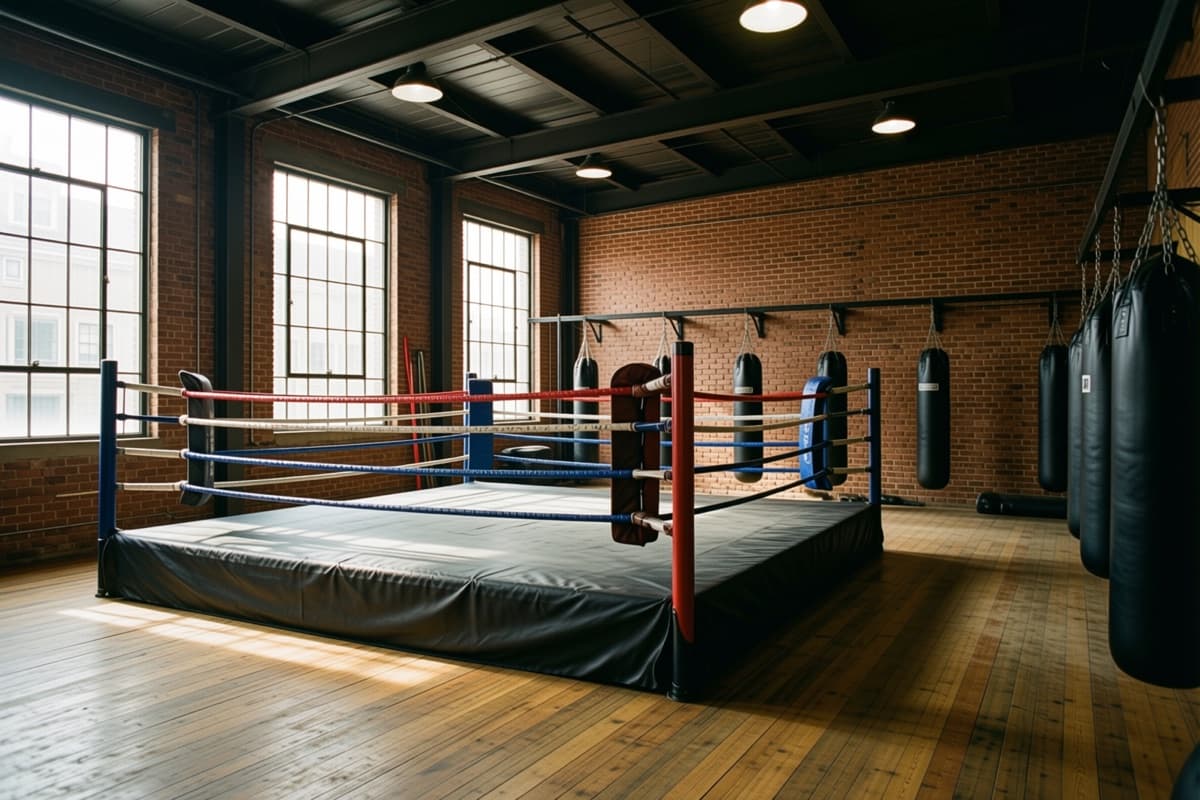
The biggest budget decision: do you install a ring. A full-size ring on a platform costs in the range of 25,000-60,000 PLN and takes over 50 m² of floor. It gives the club prestige and is essential for a competitive team, but at the start it does not pay for itself. Most new clubs begin with mats and a sparring corner and add the ring after a year, once the section matures.
An indicative opening budget looks like this:
- fit-out of the premises (flooring, painting, changing rooms, electrics, lighting): 30,000-80,000 PLN
- bag rack plus 6-10 heavy bags with hardware: 8,000-15,000 PLN
- club equipment: gloves, headgear, focus mitts, pads, spare wraps: 6,000-12,000 PLN
- mats and conditioning zone (ropes, kettlebells, bands, small gear): 10,000-20,000 PLN
- full-size ring — optional: 25,000-60,000 PLN
- deposit, first months of rent, signage, website and launch marketing: 20,000-40,000 PLN
A realistic opening budget without a ring lands in most cases between 80,000 and 160,000 PLN. With a ring and a bigger hall, plan for 150,000-250,000 PLN. Do not cut club equipment to zero: shared gloves wear out after half a year of heavy use, so treat them as an operating cost from day one, not a one-off investment.
Second-hand equipment can cut this budget by 20-30%. Closing clubs sell off rings, bags and mats for a fraction of list price, and the listings circulate in industry groups. Be careful with used protective gear, though — members prefer new headgear and gloves, and their condition directly affects safety on the floor.
Monthly fixed costs
The second column in your spreadsheet is what you pay regardless of member count. Rent for 150-250 m² in a service location is 6,000-15,000 PLN a month in most Polish cities. Utilities with heating and ventilation add 1,500-3,500 PLN. A coach running a group class usually takes 100-180 PLN per session, so with 30-40 classes a month the coaching schedule alone costs 4,000-7,000 PLN, unless you coach part of them yourself.
Add accounting, insurance, cleaning supplies, marketing and software — usually 2,000-4,000 PLN together. In total, the monthly fixed costs of an average boxing gym sit between 15,000 and 30,000 PLN. At a 200 PLN membership you need 75-150 active members just to break even.
When signing the lease, negotiate a rent-free period for the fit-out. One or two months without rent is in practice 10,000-30,000 PLN that stays in your equipment budget. Landlords of commercial units are used to such clauses, especially on a 3-5 year lease.
In a typical boxing gym the break-even point is in the range of 100-150 active memberships. A club that tracks renewals and attendance from day one usually gets there in 6-12 months. A club run from a notebook — often never.
First revenue: memberships, youth sections and personal training
The foundation of revenue is the monthly open membership. In large Polish cities prices usually range from 180 to 280 PLN, in smaller towns 130-180 PLN. A recurring membership, charged automatically every month, gives predictable revenue and better retention than drop-ins. Keep single entries in the price list as the most expensive option per session — they should nudge people towards a membership, not compete with it.
The second pillar is kids' and youth sections. Classes twice a week at 120-200 PLN a month fill the hall between 4 and 6 pm, before the adults arrive. The third pillar is personal training and fight preparation — rates of 100-250 PLN per hour depending on the city and the coach's reputation. A well-run club mixes these sources: kids in the afternoon, adults in the evening, personal sessions and sparring at weekends.
Start selling before you open, not on opening day. Discounted founding memberships, sign-ups for a free open session and partnerships with nearby companies build a client list before the first class. A club that opens with 40-60 paid memberships shortens its road to profitability by several months.
A management system from day one, not from the first crisis
Most boxing gyms start the same way: sign-ups on Messenger, an attendance list in a notebook, cash payments into an envelope. With 30 members it somehow works. With 120 you start losing money without seeing it: a member trains for the third month on an expired pass, the 5 pm group is bursting while the 8 pm one is empty, and you only remind people to renew when you happen to bump into them.
That is why a management system should go live on opening day, not after the first chaos. A schedule with class limits, passes that check validity at every entry, online payments and automatic renewal reminders — that is work you no longer do by hand. See how EloByku for boxing gyms works — one app connects the owner, the coaches and the members, from class booking to section billing.
There is also a harder argument than convenience. First-year data — group attendance, renewals, peak hours — tells you when to add a class, which coach to reward and whether the ring will finally pay for itself. A club that has this data makes decisions. A club that does not, guesses.
Summary
Opening a boxing gym in Poland is a 3-6 month project with a budget in the range of 80,000-160,000 PLN without a ring. The order matters: first a space with high ceilings and ventilation, then business registration with the right activity codes, sanitary notification and liability insurance. If you plan kids' sections, prepare the child protection standards before the first class, not after.
Build the budget around one simple rule: the hall and equipment must last 12 months of work, and your cash reserve should cover 3-4 months of fixed costs. Recurring memberships and full groups will carry you to break-even — and both are easier to control with a system than with a notebook. Check EloByku's offer for boxing and combat-sports gyms and run your own scenario before you sign the lease.