Creatine in sport: what research says and how to use it in training

If you run a fitness studio or train clients, you probably hear questions about supplements all the time. One comes up more often than others: does creatine actually work? The answer is clear. Creatine is one of the most thoroughly researched supplements in sports science history — with over 700 peer-reviewed studies confirming its effectiveness. Here's what you need to know to give your clients informed advice.
What creatine is and how it works in your body
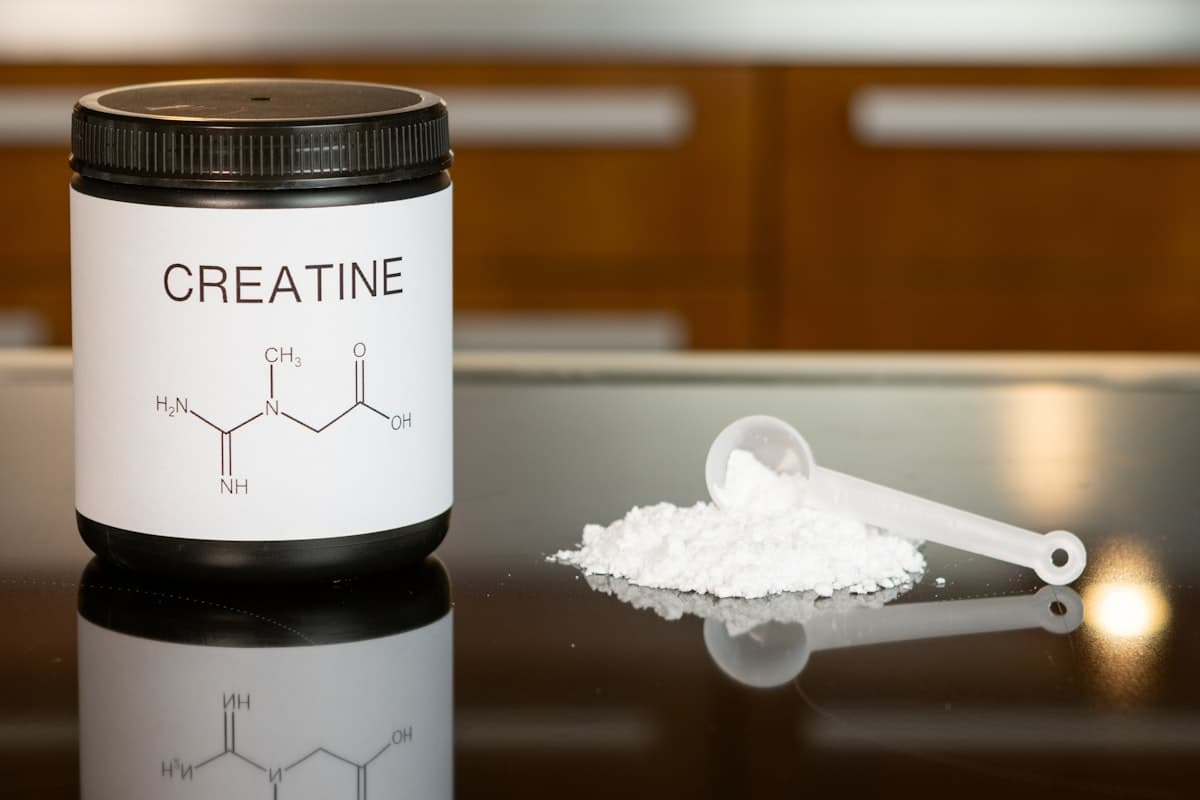
Creatine is a natural compound your body produces from three amino acids: arginine, glycine, and methionine. About 95% of creatine is stored in skeletal muscles as phosphocreatine. Phosphocreatine plays a key role in regenerating ATP — the primary energy carrier in your cells.
During intense exercise (sprinting, bench press sets, or EMS training), your body depletes ATP within 2-7 seconds. Phosphocreatine enables faster ATP resynthesis, which translates to better performance in short, high-intensity efforts. Creatine supplementation increases muscle phosphocreatine stores by 20-40%, delivering a measurable training advantage.
You can find creatine naturally in red meat and fish. A 500 g serving of raw beef provides around 2.5 g of creatine. By comparison, the standard supplementation dose is 3-5 g daily. That's why physically active people often reach for supplements to cover what diet alone can't provide.
What scientific research says — facts over myths
Creatine has been studied since the 1990s. The International Society of Sports Nutrition (ISSN) in its 2017 position stand called it the most effective ergogenic supplement available to athletes. This isn't an influencer's opinion — it's scientific consensus based on hundreds of controlled studies.
The main confirmed effects of creatine supplementation span several areas. Maximal strength increases of 5-10% in resistance exercises. Sprint performance improvement of 10-15% in repeated bouts. Lean body mass gains of 1-2 kg over 4-12 weeks. Faster recovery between training sets.
A meta-analysis by Lanhers and colleagues (2015) reviewed 60 studies and confirmed that creatine supplementation improves strength outcomes regardless of age, sex, or training level. This means the benefits apply to your beginner client just as much as to an advanced athlete.
Over 700 peer-reviewed studies confirm creatine's effectiveness. The ISSN recognizes it as the most effective ergogenic supplement available to athletes.
It's also worth debunking a popular myth. Creatine does not harm the kidneys in healthy individuals. A 2019 systematic review (Kruschitz et al.) found no negative effect on kidney function at doses up to 10 g daily, even when used for up to 5 years. The only requirement is adequate hydration — but that's a rule for every active person.
How to dose creatine — research-backed protocols
There are two proven dosing protocols. The choice depends on how quickly you want to reach full muscle creatine saturation.
Loading protocol — for the first 5-7 days, take 20 g daily (4 servings of 5 g spread throughout the day). Then switch to a maintenance dose of 3-5 g daily. Muscle saturation occurs within a week.
No-loading protocol — from day one, take 3-5 g daily. Full muscle saturation occurs after 3-4 weeks. This approach is more convenient and eliminates the risk of stomach discomfort that occasionally appears with high doses.
Timing doesn't matter. Research shows no significant differences between taking creatine before training, after training, or in the morning on an empty stomach. Consistency matters — daily intake of 3-5 g maintains steady muscle levels.
The most bioavailable form is creatine monohydrate. Despite numerous variants on the market (creatine HCL, buffered, ethyl ester), none has proven more effective than monohydrate in comparative studies. Monohydrate is also the cheapest option — monthly supplementation costs around 15-25 PLN.
Creatine and different training types — when it works best
Creatine delivers the greatest benefits in training based on short, intense efforts. If your clients train at an EMS studio, in a gym, or do interval training — creatine supplementation can meaningfully impact their progress.
Strength training — this is where creatine shines brightest. Increased phosphocreatine availability allows 1-2 extra reps per set. Over months of training, those extra reps translate to greater strength and muscle mass gains. Studies show performance improvements of 5-10% in compound exercises (squat, bench press, deadlift).
EMS training — electrical muscle stimulation generates intense contractions in short bursts. Phosphocreatine stores deplete quickly, so supplementation may support recovery between impulses. While studies specifically on EMS combined with creatine are limited, the biological mechanism suggests potential benefits for your studio's clients.
HIIT training — creatine improves performance in repeated sprints. A meta-analysis by Giraldo et al. (2022) showed 7-12% improvement in repeated sprint tests among people supplementing creatine for at least 5 days.
Endurance running or cycling beyond 30 minutes is an area where creatine provides marginal effects. Phosphocreatine plays a secondary role there. That's why marathon runners or road cyclists will see fewer measurable benefits from creatine supplementation.
How to talk to clients about creatine
As a personal trainer or studio owner, you're the first person clients turn to with supplement questions. Reliable knowledge builds your authority and client trust.
A few principles worth following in conversations. First — never promise miracles. Creatine isn't steroids. It provides measurable but moderate performance improvement. Second — always emphasize that a supplement won't replace a good training plan, diet, and sleep. Creatine works best as one piece of a larger puzzle.
Third — refer clients with health conditions to a doctor. While creatine is safe for healthy individuals, people with kidney or liver disease should consult a specialist before supplementing.
It's also worth knowing that about 20-30% of the population are non-responders to creatine. These are typically people who naturally have high muscle phosphocreatine stores (often men who eat a lot of red meat). The supplementation effect will be minimal for them. This is normal and worth explaining to your client before they start.
Summary
Creatine is a supplement with solid scientific backing, a safe profile, and a low price. Creatine monohydrate at 3-5 g daily is a proven protocol you can confidently recommend to your clients — provided they're healthy and adequately hydrated.
For studio owners and personal trainers, supplement knowledge isn't just added value — it's part of professional client service. A client who receives reliable, research-based information from you stays longer and recommends you to friends.
Running a studio and want full control over your schedule, clients, and payments? See how EloByku can simplify your daily work.