Types of creatine: monohydrate, HCL, or buffered — which to choose and how to check purity

Your client asks which creatine to buy. You open an online store and see: monohydrate, HCL, buffered, ethyl ester, chelated, micronized. The names sound scientific, packaging promises better absorption, and prices vary up to fivefold. Which form actually deserves attention? In this article, we compare creatine forms based on scientific research and show how to check product purity before purchasing.
Creatine forms available on the market
You can find at least eight different forms of creatine on the supplement market. Every manufacturer claims their variant is better absorbed, more effective, or gentler on the stomach. Let's look at the most important forms.
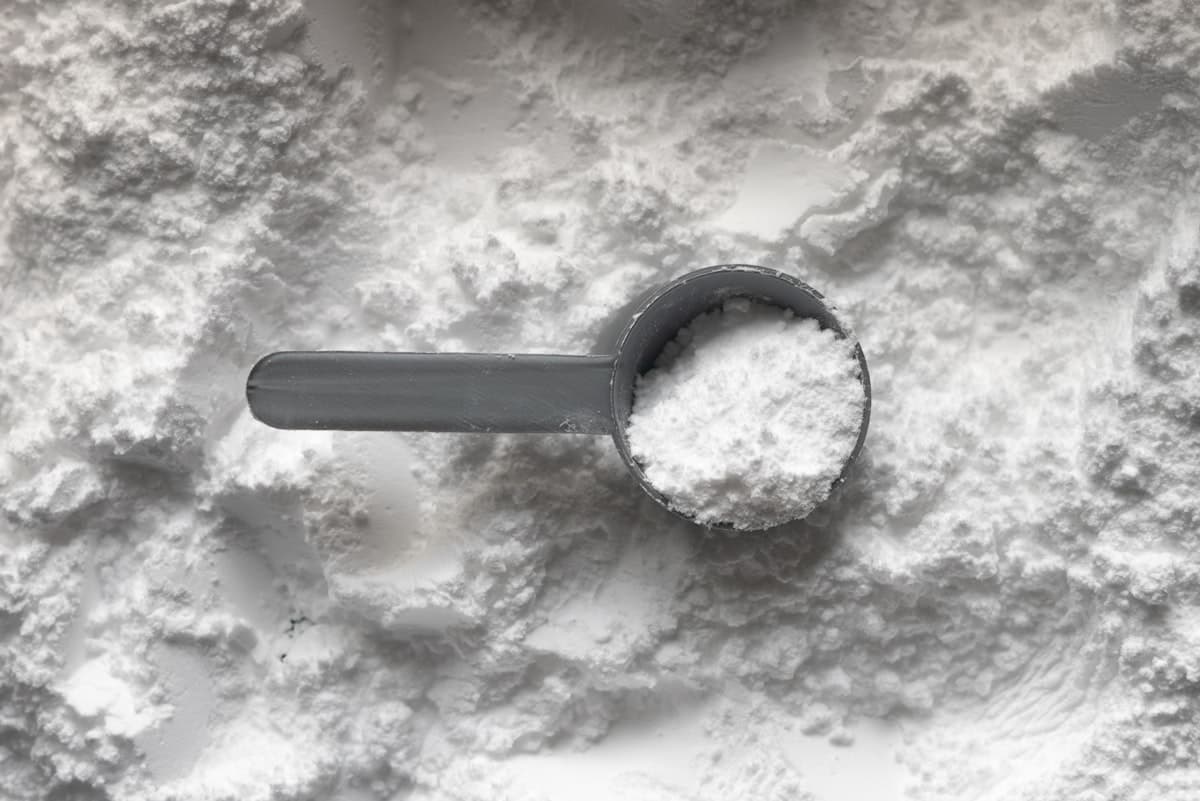
Creatine monohydrate is the simplest and oldest form. A creatine molecule bonded with a water molecule. It contains about 88% pure creatine. Monohydrate is the subject of over 95% of all scientific studies on creatine. Monthly cost ranges from 15-30 PLN.
Creatine HCL (hydrochloride) is creatine bonded with hydrochloric acid. Manufacturers claim it dissolves better in water and requires smaller doses. Indeed, solubility is higher. But higher solubility doesn't automatically mean better absorption in the intestines. The price is 3-5 times higher than monohydrate.
Buffered creatine (Kre-Alkalyn) is monohydrate with elevated pH, supposedly resistant to conversion to creatinine in the acidic stomach environment. The manufacturer patented this form and promotes it as more stable. The price is 2-4 times higher than monohydrate.
Creatine ethyl ester (CEE) was supposed to cross cell membranes without transporters. In practice, it proved less stable than monohydrate and breaks down faster into creatinine — a useless byproduct.
Micronized creatine is simply monohydrate ground into finer particles. It dissolves better in water, which may reduce stomach discomfort. In terms of effectiveness, it's identical to standard monohydrate. The price is slightly higher.
What comparative research says — hard data
The key question is: is any alternative form measurably better than monohydrate? Scientific research gives a clear answer.
Jagim and colleagues (2012) compared monohydrate with Kre-Alkalyn in a double-blind study of 36 people training over 28 days. Result: both groups achieved identical gains in strength and muscle mass. No advantage of the buffered form over monohydrate.
Spillane and colleagues (2009) studied creatine ethyl ester (CEE) versus monohydrate. After 6 weeks of supplementation, the CEE group had higher creatinine levels (a useless metabolite) and lower muscle creatine levels. CEE proved inferior to monohydrate.
Research on creatine HCL is limited. There is not a single peer-reviewed comparative study demonstrating HCL's superiority over monohydrate for strength, endurance, or lean mass gains. Marketing arguments rely solely on solubility — a parameter that doesn't translate to better athletic outcomes.
No alternative form of creatine has demonstrated superiority over monohydrate in scientific studies. The ISSN's 2017 position stand confirms: creatine monohydrate is the most effective and best-researched form of this supplement.
The International Society of Sports Nutrition (ISSN, 2017) position is unequivocal: creatine monohydrate remains the gold standard. Alternative forms offer no additional benefits and often cost several times more.
How to check creatine purity before buying
Choosing the right form is one thing. The second — equally important — is product purity. Cheap creatine may contain impurities from the synthesis process: dicyandiamide (DCD), dihydrotriazines (DHT), or above-norm creatinine levels.
Look for the Creapure label on the packaging. Creapure is creatine monohydrate manufactured in Germany by AlzChem. The production process guarantees purity above 99.99%. Each batch is tested for DCD, DHT, creatinine, and heavy metal content. It's the most trusted raw material brand on the market.
Check the Certificate of Analysis (CoA). Reputable manufacturers publish certificates of analysis on their websites. The document should include: production date, batch number, purity test result (minimum 99%), impurity levels below accepted norms, and confirmation from an independent laboratory.
Pay attention to the raw material's country of origin. Creatine produced in Europe (mainly Germany) is subject to strict quality standards. Raw materials from China — which constitute the majority of cheap creatine — don't always undergo equally thorough testing. The price difference between Chinese and European creatine is typically 10-20 PLN per package, but the purity difference can be significant.
Quality certifications — what to look for
Beyond Creapure, several other certifications help assess supplement quality. As a trainer or studio owner, it's worth knowing them to advise clients competently.
Informed Sport is an anti-doping testing program. Each supplement batch is tested for substances banned by WADA. This certification is particularly important for clients who compete — it provides confidence that the product doesn't contain contaminants that could trigger a positive doping test.
NSF Certified for Sport is the American equivalent of Informed Sport. Products are tested by the independent NSF International organization for declared ingredient content and absence of banned substances. Many professional sports leagues in the US require athletes to use only supplements with this certification.
GMP (Good Manufacturing Practice) is a production standard, not a product certification. It means the manufacturing facility follows good manufacturing practices. GMP on the label is a minimum — not a guarantee of the highest purity, but confirmation of basic hygiene and quality control standards.
Practical tips — what to recommend to clients
Based on scientific data and market analysis, here are concrete recommendations you can share with your clients.
For most of your studio's clients, the optimal choice is creatine monohydrate with Creapure certification. It combines the highest research-backed effectiveness with guaranteed purity. Monthly cost is 25-40 PLN — an amount most active people can easily fit into their budget.
If a client complains about stomach issues with monohydrate, suggest micronized creatine. Finer particles dissolve better and may reduce discomfort. It's the same active substance, just in a finer form.
Advise against ethyl ester (CEE) — research has shown it's less effective than monohydrate. Creatine HCL and buffered forms lack sufficient evidence of superiority and cost significantly more. If a client wants to use them, there are no health contraindications, but they should know they're paying for marketing, not better results.
For clients competing in sports events, recommend products with Informed Sport or NSF Certified for Sport certification. Anti-doping safety is a priority and the extra cost is worth the peace of mind.
Always advise clients to buy creatine in pure powder form, without added flavors or colorings. Extra ingredients raise the price and may add unnecessary calories from sugars. Creatine powder is flavorless and easy to add to water, juice, or a protein shake.
Summary
The supplement market offers many forms of creatine, but science is clear: creatine monohydrate is the gold standard. No alternative form has demonstrated superiority over monohydrate in peer-reviewed research — neither in effectiveness nor bioavailability.
When choosing a product, raw material purity is key. Creapure certification, a certificate of analysis from an independent lab, and European origin — these three elements help select a safe product. For competitive athletes, add an anti-doping certification like Informed Sport or NSF.
As a trainer or studio owner, you influence your clients' purchasing decisions. Reliable, data-based knowledge — instead of repeating marketing slogans — builds your expert reputation and strengthens client trust in your studio.